This is a continuation from part 1.
I’ve broken out this section to talk separately about when I compare myself to different socialization models, and why that can induce false loneliness. Each of the “fights” below indicate logical fallacies that have led me to outsized loneliness and discontent.
Me vs. the “Max”
In this fight, I am pitting myself against my personal maximum. This is what I would do if I had boundless energy, buckets of free time, all the money, and no other expectations of me. Occasionally, I have managed to be this person in my life, and I have just killed it. It was a delight.
The problem is that my personal max is unsustainable and unattainable. If this is my baseline measurement for “good” then I will be continually disappointed in myself, see graph below. And when I feel disappointed in myself it can turns into negative feelings like loneliness.
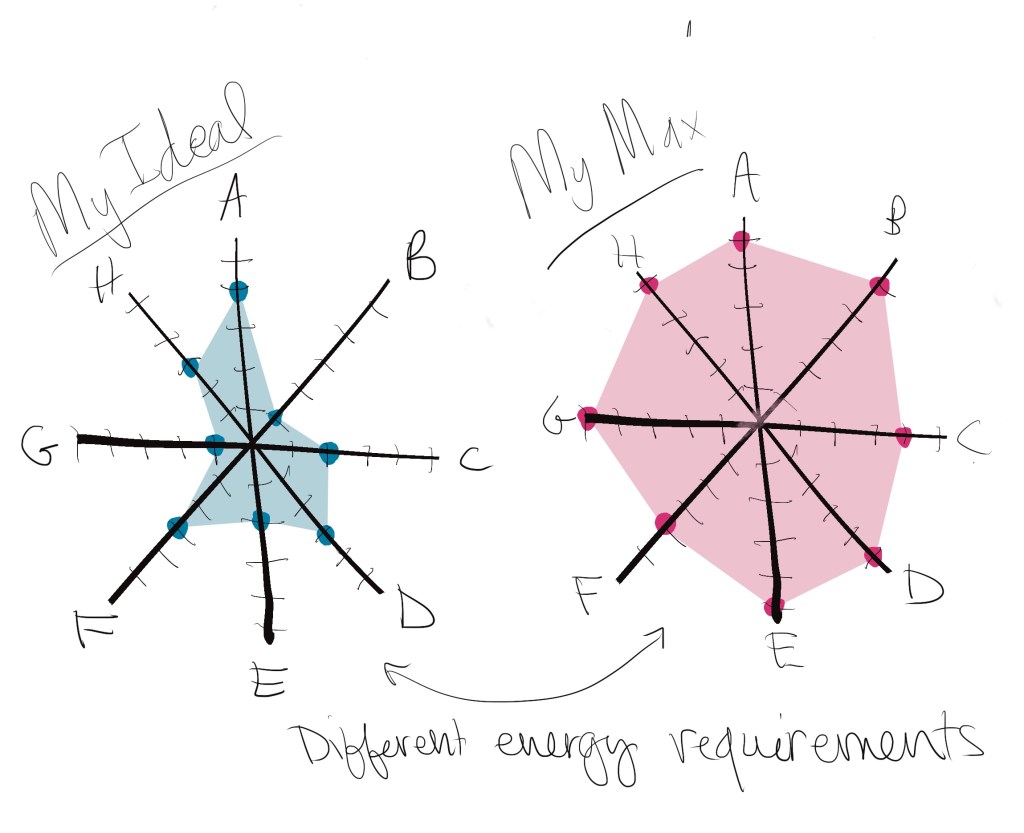
Here’s the dubious logic of how I get from “less social than I expect myself to be” to “therefore I am lonely”.
- I used to hang out with my friends three times a week*.
- I was happy when I did this.
- This must mean that to be happy, I should hang out with them three times a week.
- We only hang out once a week now, which is only 33% as good as 3 hangs. I’m going to try and schedule two more things next week.
- Hmmmm…no one is responding.
- Oh look, only one person can come to one event and they have to show up a little late.
- I’m a person that only has one friend.
- I used to have six friends.
- Why don’t my friends like me anymore?
- I’m unlikeable.
See? Dubious. Unhelpful.
*Details in both dubious lists are made up…who can hang out 3x a week??
Me vs. the Ideal (who isn’t quite like me)
This is something that often happens when I compare myself to friends or colleagues who are close enough to me socially or via proximity that I think that I can use them as a reliable model for what is socially attainable.
In the graph below, you can see “Me” on the left and “Ideal” on the right. Me and Ideal have three of the same spokes (social interaction types that we enjoy and prioritize) but another five that do not overlap. We may connect so much on the similar ones that I start to think that I should prioritize the other person’s spokes because I want to be more like the Ideal. Because…self improvement is always a good thing, right? (dubious logic continued after the graph)
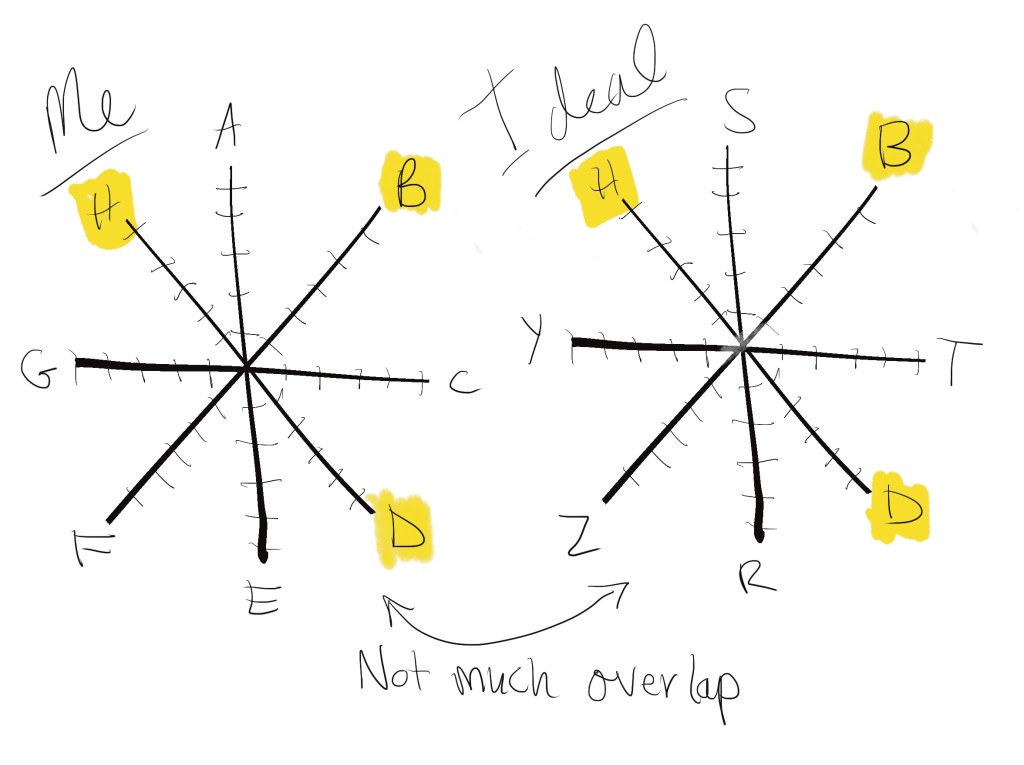
Here’s some dubious logic about how using the Ideal WIQLM to make decisions can lead me to loneliness:
- Wow, my friend Ruth really has it all together and she seems so happy and popular.
- I have a few social events I want to go to, and some I am not sure about, which should I pick?
- What would Ruth do?
- I should do all these events and more. Ruth has time to volunteer on top of taking her kids to sports and she’s in leadership at a professional group and she asked me to join it.
- This first event is great! I feel like I’m really part of something.
- This professional group is tiring, I’m trying to keep up, but I feel alone in this room because I can’t connect. I guess I’ve only signed up for two more months of this. I have to stick it out.
- I have to cancel on my friends because this group I signed up for.
- I’m overwhelmed and stop texting my friend back.
- When Ruth asks me if I want to sign up for another quarter…I say yes, because this time I’ll make an effort to see my friends too. It’ll be fine…
- Two months later I send an abject apology letter and quit the group. I never talk to the group people again.
Me vs. the Designed Archetype
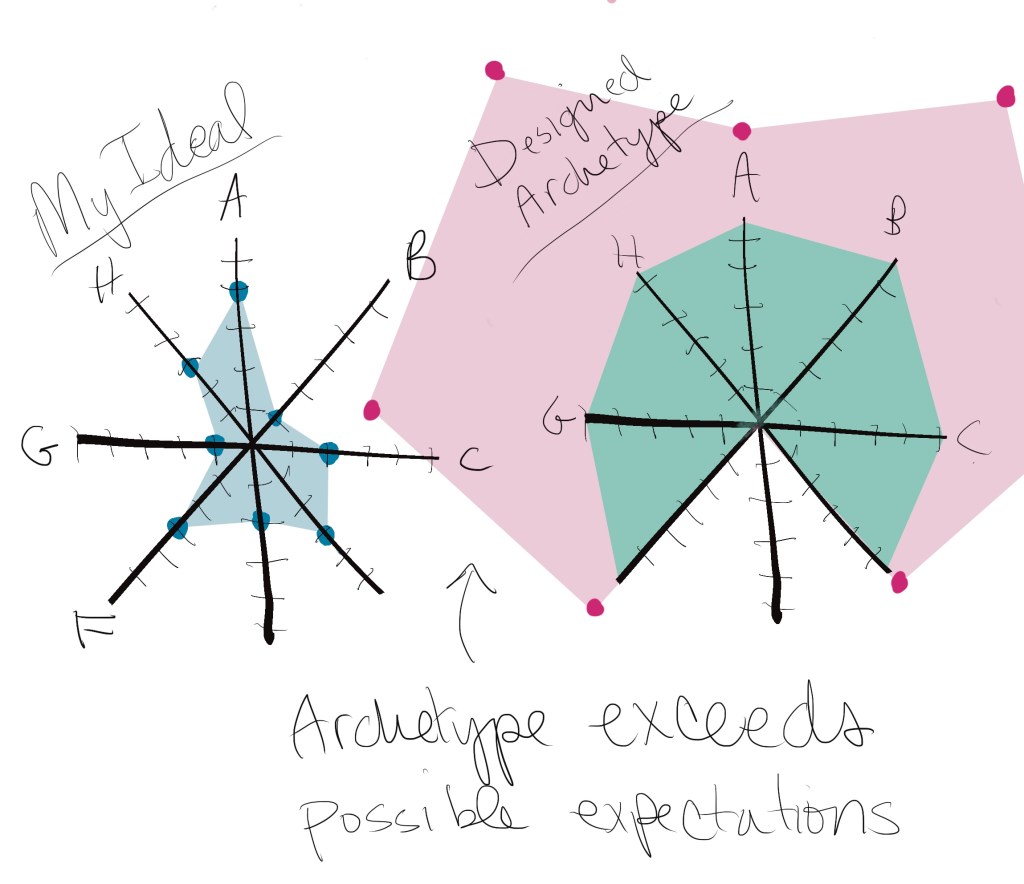
The designed archetype is a real or fictional person whose existence is curated and exaggerated for effect. Consciously, I know that social media feeds and movie/tv/book/reality show characters aren’t real, but that might not stop me from comparing myself to them or coveting what they have. I remember wishing for years that I had a group of friends like the show Friends or like Sex and the City and endlessly trying to recreate that in real life (spoiler alert, it doesn’t work).
The problem with the designed archetype is that it is usually so exaggerated that it’s not attainable at all. It’s actually off the scale for what 99% of the population can attain or sustain, see the graph below for a visual. And this may cause me to rate myself even more negatively in comparison to the archetype.
I’m not going to keep doing the dubious logic lists, because I think you can extrapolate from the above, and this post is too long already.
Special designed archetype side fight:
Me vs. the SPECIAL EVENT
I also find a lot of comparative loneliness around every holiday and events like birthdays. These days have a lot of social mores and advertising dictating what a successful SPECIAL day should look and feel like. Even people that are around other people can report feeling lonely on these days because they are not feeling the correct feeling (e.g., the Christmas spirit!).
Special event loneliness is real, but you can also take steps to minimize the loneliness leading up to these days and during the day itself by paying close attention and strategically planning social events early to take the edge off.
Me vs. Past Me
Oooh this one is rough. I used to be able to do it, why can’t I do it now?
Here’s an easy metaphor for this: When I was younger, I was an athlete. Nothing fancy, just high school and below, but I did a few varsity sports and spent long enough in one sport to do some damage to my skeleton in fun ways (thanks volleyball). But for a long time after, I had no problem just doing sporty stuff. Now that I’m older, I can’t do the athletic stuff that I used to be able to do, which makes me feel bad and old. And when I forget I can’t do that, I injure myself.
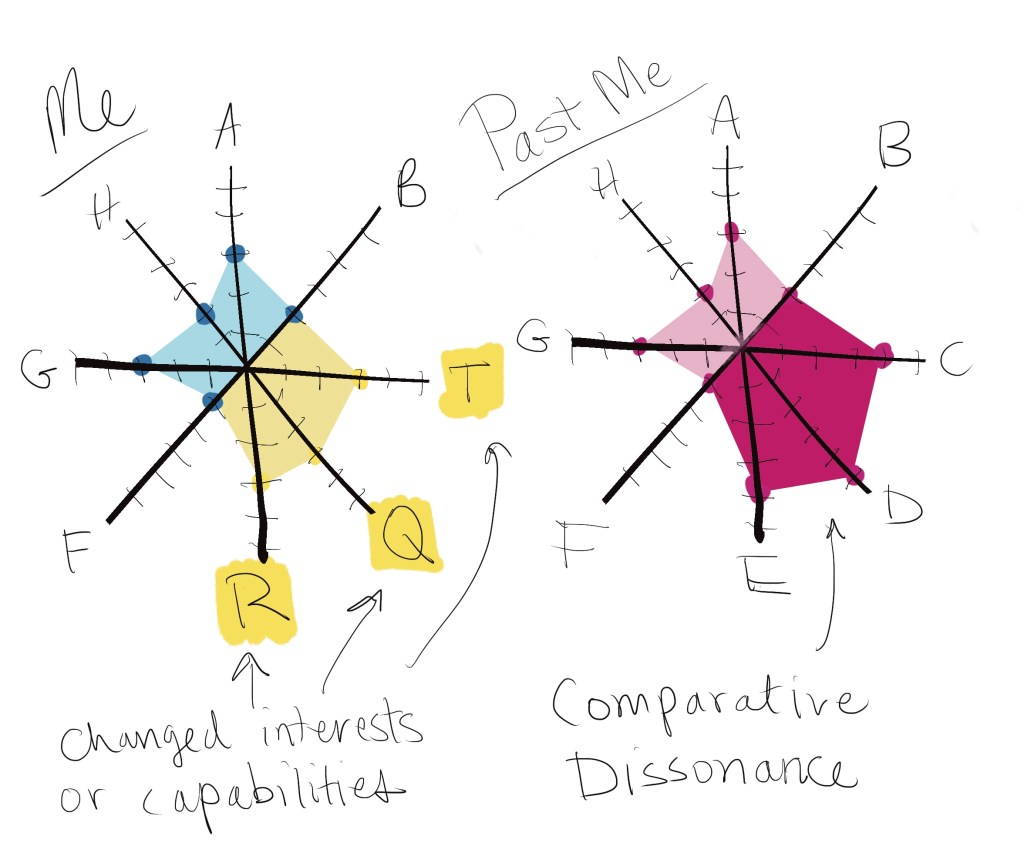
I feel the same way socially. I just don’t have the extra reserves to attend long events, or go to very crowded places. I have more responsibilities and have to spend more time recovering to get back to baseline. I also just don’t have the same interests. And if I lionize my past self “I used to be exciting” then I will constantly try to strive for either unattainable exertion or I will sign up for events that I will now not enjoy. (Have you ever gotten nostalgic and gone back and listened to music you loved in college when you were a pretentious hipster and found it incredibly annoying? No? Just me?)
In the graph below, you can see what happens when I compare myself to my past. It just ends up with comparative dissonance where the graphs don’t match up, so I think everything is even worse.
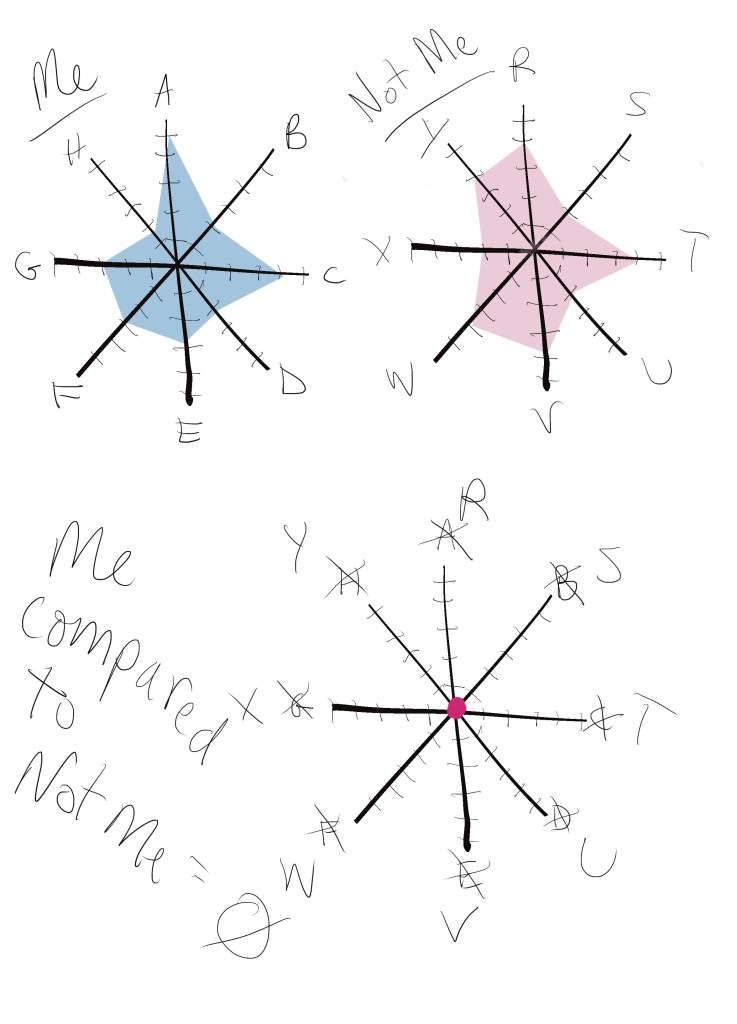
Me vs. Not Me
This is the most insidious one. This is where I currently don’t like myself so I choose someone that is NOT ME to measure myself against. I would choose an archetype such as “popular person” or “avid outdoor adventurer” and try to become them. The problem is I am not built to be either of these, I’m an acquired taste friend and an indoor cat. But striving to be this other archetype felt so validating, like I was doing something that I would hang onto that for longer than I should. And I often did this when I was at my loneliest because trying to turn into this person made me feel like I wouldn’t be lonely in the future.
Conclusion (also known as why does this even matter?)
I think it’s worth examining when loneliness occurs and what the root causes are of a specific instance of loneliness. If I can separate out comparative loneliness (the stuff on this page) from actual loneliness (how I feel in my skin as I am) then I may be able to right-size my loneliness and be able to direct my energy to the most effective strategy to become not-lonely (content).
 The Friend Manual: How to make friends when you're bad at it