In the last month, when writing about loneliness, I kept coming upon this idea of changing by degrees – changing small things and making tweaks instead of making sweeping pronouncements or big changes. For someone who struggles with moderation, changing life by degrees is an alien, but probably life-changing idea.
To learn how to change by degrees, first I want to start with a thought experiment around binary and restricted thinking. Binary and restricted thinking can show up anywhere in life where behaviors run into expectations.
Why does binary and restricted thinking matter with friendship?
It matters for me because it affects the way I interpret my friend’s behaviors, my own behaviors, my success in making and keeping friends, and informs the way I approach making and keeping friends. It’s one of those bedrock assumptions that affects everything.
The Starting Point
Here’s where I’d like to start. A simple gradient from bad to good.
I’m using good / bad for the examples in this post, because it’s super simple to understand. But, this scale can be anything:
- friend / not friend
- happy / sad
- productive / lazy
- rude / not rude
If you asked me how to organize different social behaviors from bad to good (in a very simple world) I would probably tell you that they fall along a gradient between the two extremes.

Where an event falls on this scale would be based on any number of factors. And, I would probably assume that my answers would be more or less the same if you asked me later.
But, as someone who’s armchair-interested in behavioral economics, I know that my simple system is likely different from how I actually function in real life. And I’ve been monitoring my social responses to people for years and am often baffled at my lack of consistency and varied interpretation of similar events or the same event at different times.
Therefore, this model seems good, but it’s not the model that I actually use. I think of this gradient model like the rational man model in economics – simple, elegant, and producing inaccurate predictions.
I’m sure there are some people out there who are able to follow the gradient model. I believe they would probably be more consistent in their behaviors and interpretations of behaviors and would tend to be very fair. However, the model itself suggests, they would likely have limited flexibility when interpreting extenuating circumstances.
Binary thinking
The next model in my thought experiment tour sees behaviors or situations as binary. They are either good or bad, no in between. This model is very simple and clear but also rigid.

When I run thought experiments through this model, it seems people thinking this way may allow a wide variety of behaviors in each camp, but become punitive or withdraw immediately when a “bad” behavior happens, even a mildly bad behavior. The same may occur with “good” behaviors. Mildly bad behaviors may be treated with similar level of punishment as very bad behaviors or adulation over small things the same as large.
This could be very confusing to other people as they may feel that reactions to small behavior changes are outsized and unfair, e.g., being 10 minutes late vs. 7 minutes late results in very different reactions.
Restricted thinking
The restricted thinking models are grouped together and have limited views of what constitutes good and bad.
Restricted – positive
The restricted – positive model has a small band of bad behaviors defined and the rest is up for interpretation, with a bias towards all behaviors being acceptable.
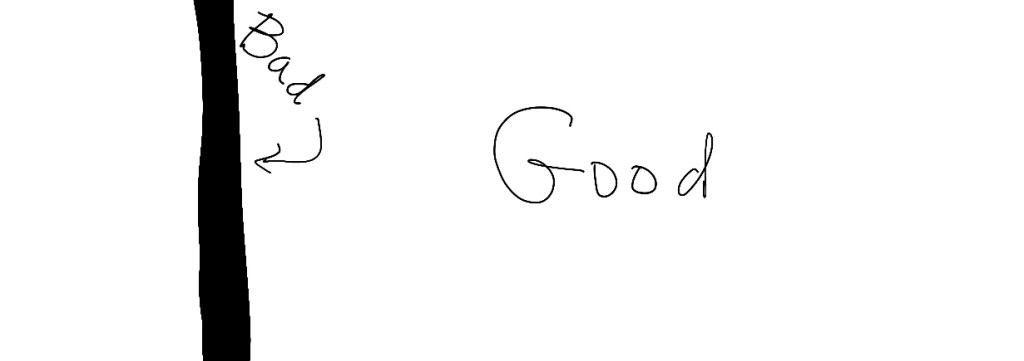
If someone has a tendency towards restricted – positive, then they may accept all behaviors except very specific bad behaviors without reservation. The thinking goes like this: if this behavior is not part of this very small band of “bad” things, then it must be “not bad” which is essentially “good” and therefore it is allowed or praised, e.g., at least this boyfriend isn’t sleeping with my best friend this time.
This system would be very chaotic.
In friendship, this system would show up negatively as people who are friends with frenemies or who continue to be friends with people that are using them for specific reasons. People like this may also assume everyone is their friend with very little evidence and be hurt when it turns out they are not friends.
Restricted – negative
The restricted – negative model has a small band of good behaviors defined and the rest is up for interpretation, with a bias towards all behaviors being not acceptable.
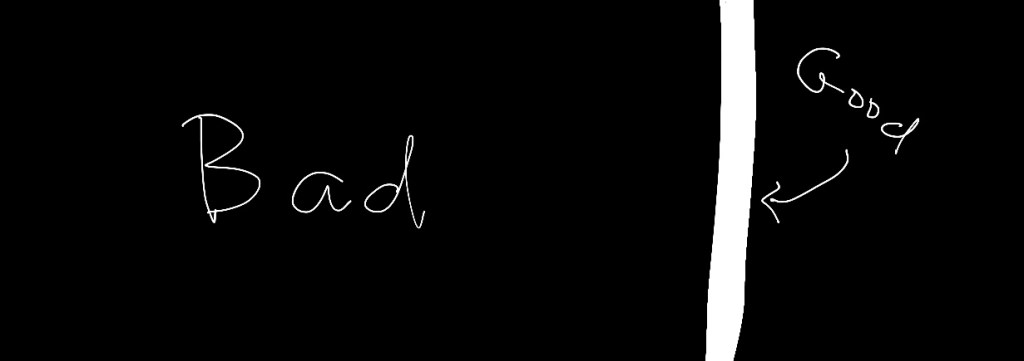
If someone has a tendency towards restricted – negative reads of situations and behaviors, then they may see all behaviors except a narrow band as bad or negative. As a corollary to the above, the thinking is: if this behavior is not obviously “good” then it is automatically “bad”.
These people may be controlling or punitive in friendships which can lead to uneven power dynamics or loss of friends / failure to create friendships. People like this may suffer a lot of disappointment when their friends do not live up to their (likely unattainable) standards. The people may be hyper-clique-ish (think Mean Girls).
Restricted – WTF?
The restricted – WTF model has a small band of both bad and good behaviors defined and the rest is up for interpretation, with inconsistent application of acceptable / not acceptable or a failure to interpret events at all because of lack of clarity.
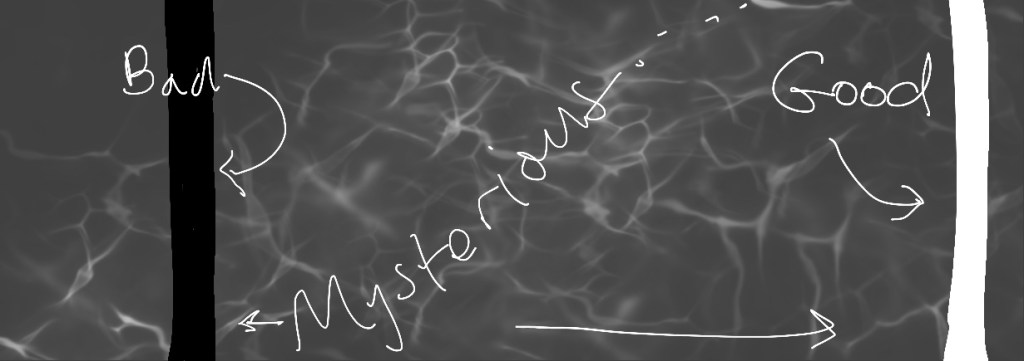
This option has restricted views on both “good” and “bad” and causes trouble sorting out anything in between – or beyond – these bands. These people may vacillate often on what behaviors are good or bad based on arbitrary factors or changing social situations (or by asking other people to define behaviors). People like this may be considered fickle or confusing, and may simply choose to opt out of interactions to reduce confusion or stress. (This is my go to schema. I can tell you that it is very unhelpful.)
Using multiple models
To further complicate things, people can use different models to evaluate their behavior and others. I may evaluate most of my behaviors using the “mostly bad” schema and others’ behaviors using the “mostly good”. Or, I maybe be able to see my experience using the gradient and others using only “mostly bad”.
Additionally, I may be friends with someone with a wildly different schema than my own, which can cause friction. I may have a laissez faire schema for friends and a very restrictive schema for romantic partners, or use one schema for aspirational friends and another for lower tier friends. When stressed, I may flip to another schema, which causes friends to be confused. Basically, it’s a big old mess.
What can be done?
It’s been worth it for me to think about my binary and restricted thinking in order to identify that it’s a problem for me (I am not naturally a gradient person). In my life I have made a lot of assumptions and tried to sort behaviors into binary camps to understand my place in the world and really didn’t get too far. When I started to make an effort to make space in between binaries things started to get better for me (and probably the people around me).
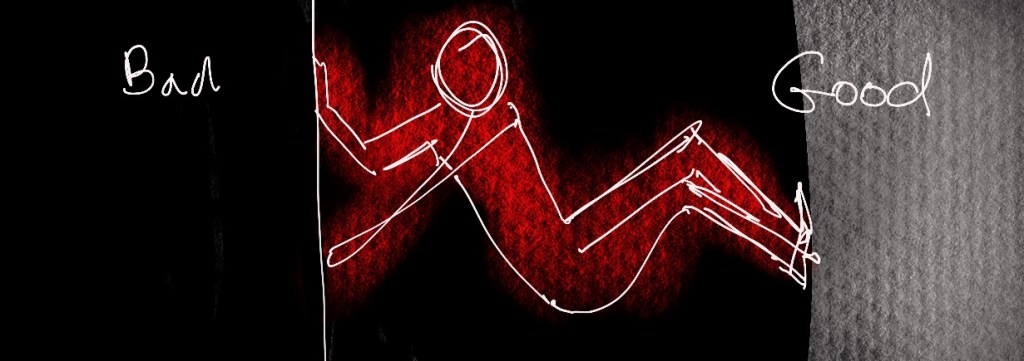
Once I had space to work in, then I could manually start making a gradient for myself. The more I do this in one area, the more I am able to be flexible in others.
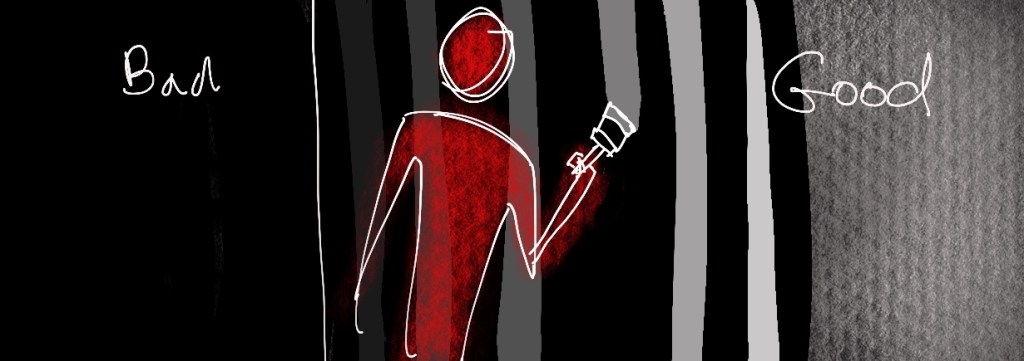
The more flexible I am, the more resilient I am.
The more resilient I am, the more I am able to make and keep friendships that keep evolving. But it’s still a work in progress.
 The Friend Manual: How to make friends when you're bad at it