Ok, so we’ve already talked about how memory can be inaccurate, and memory metadata. The next step is to talk about how memory metadata is saved (encoding) and then we can talk about recall – which was the whole point of this exercise.
What is memory encoding?
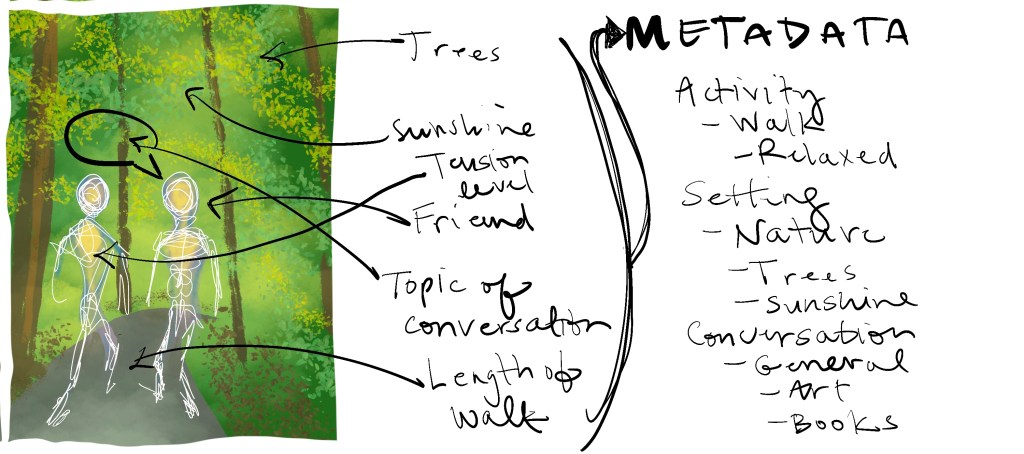
What I am calling “memory encoding” is the storage of memories coupled with the metadata of those memories. To provide a visual of how memory encoding works, here is the walk in the woods scenario from the ‘memory is inaccurate’ post.
If you’ll recall, I took a picture while on a pleasant walk with a friend and this picture below is the simplified representation that my memory was working with – this is the green picture on the left-hand side of the image below.
Because I process a lot of my memory through language, I would have stored a simplified visual impression of most of the walk, and at the same time, I would be storing memories of physical objects and experiences, such as the presence of trees and sunshine nd the existence of my friend walking next to me. I also would have been storing snippets of our conversation and general topics that we were discussing. All of this, you can see in the right-hand side of the image above (you can see how I have nested them taxonomically).
And all this information would be encoded together to make a memory of this walk.
Ok, but what about the emotions?
So, I used to like to think that I was fairly objective when it came to memory and recall of events. But, the more I look in to this, the more I realize that my current state of mind is incredibly influential on what information I am able to pay attention to in the moment and what information I encode for later.
So, here are a couple different scenarios of how I might encode this walk through nature.
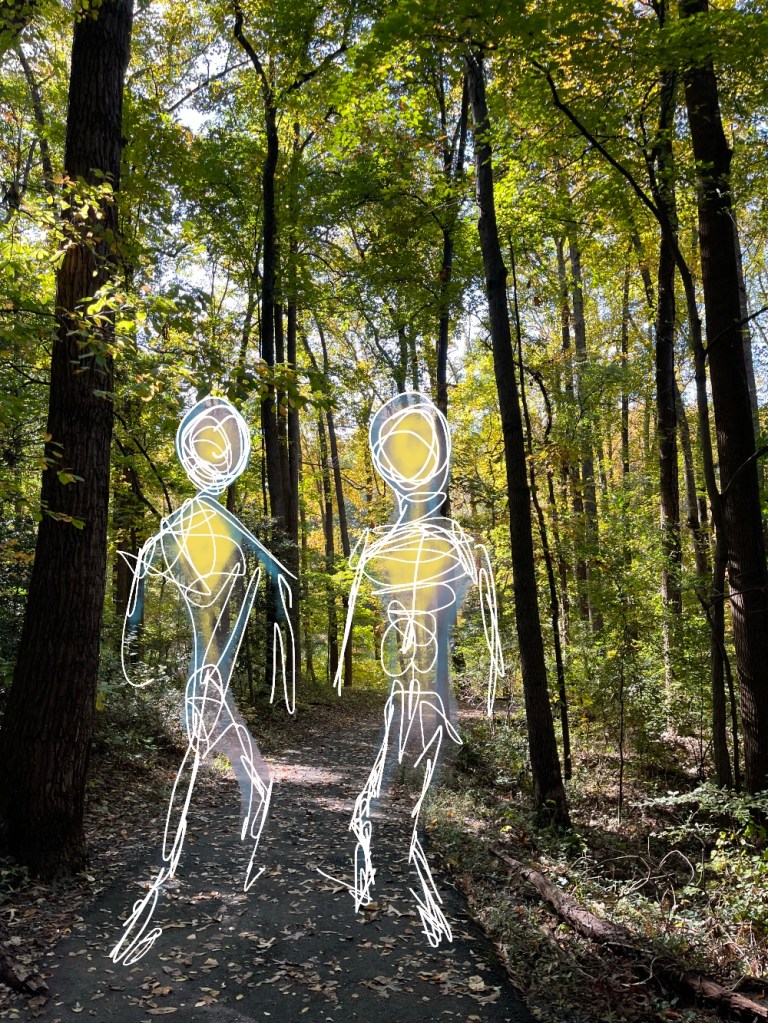
Neutral to positive memory encoding
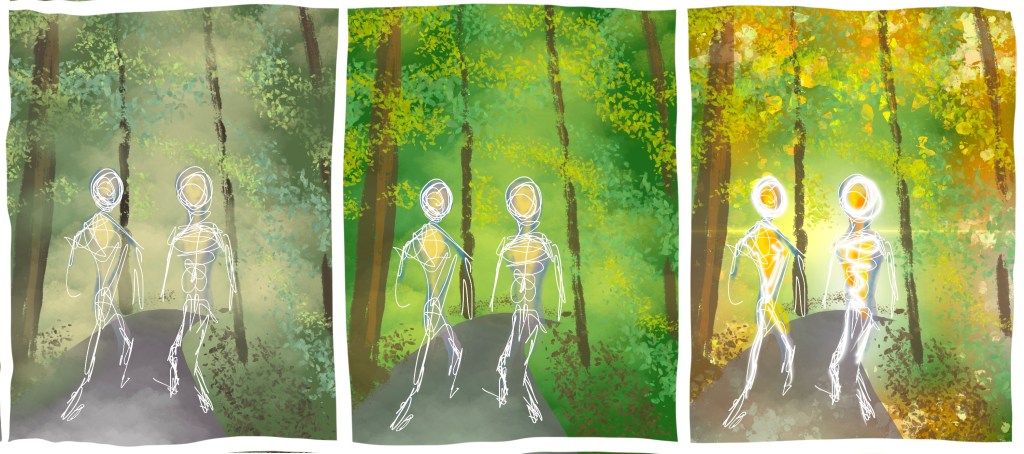
Because I was already in a pretty good mood and I took time to stop and enjoy things, I have solid memories of it looking and feeling as shown in the picture. The walk was quite long, so there were some ups and downs (ugh we got lost!) but on average, it was good.
Because I was in a neutral to positive, the type of metadata stored with this memory might include: name of people walking with me, sunny weather, fall foliage, trees, Halloween skulls (there was a cool Halloween yard setup!), and the quality: pleasant.
I also feel because I’ve been thinking about memory encoding lately and was thinking of this throughout the walk that my memories of the walk are more or less accurate, meaning that if I recreated the same event with roughly the same conditions, I would have a similar experience.
Negative memory encoding
However, if my brain was primed towards negative feelings, the same pleasant walk in the park might look and feel different (I’m the grumpy one on the left).
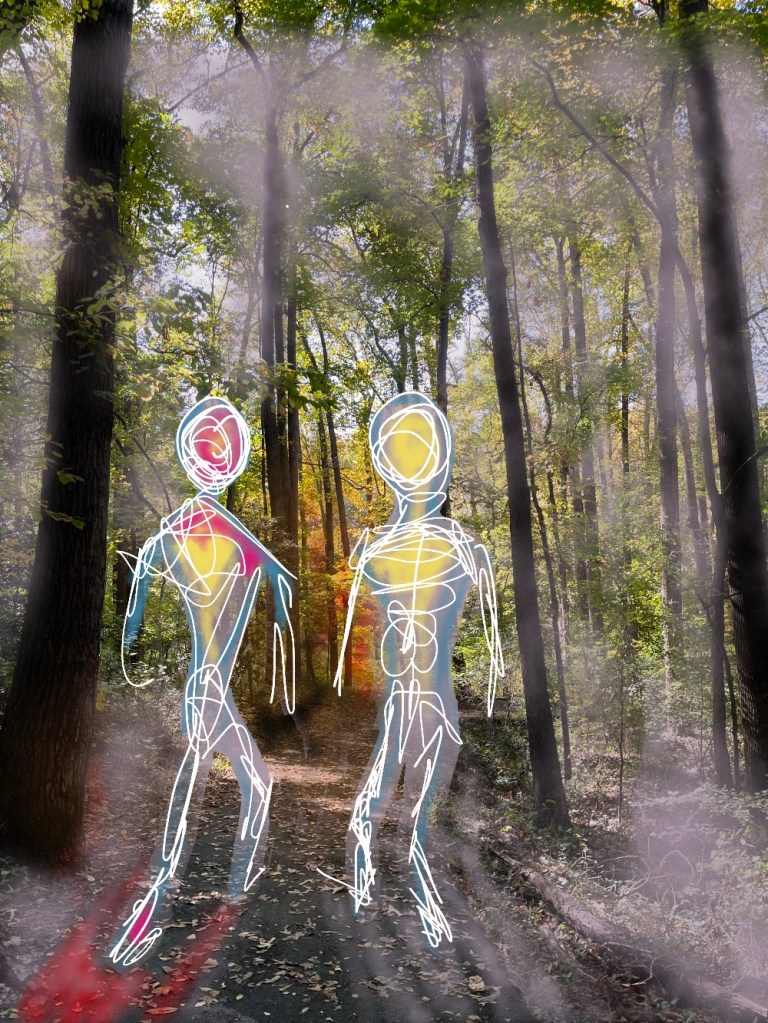
You can see that when I am in a negative space, I can take in and retain less of the positive inputs (e.g., sunshine on leaves) and am more attuned to negative internal information or discomfort. I may even overwrite positive information with potential negative information, e.g., my feet don’t hurt now, but I bet they will soon.
I may encode metadata for this experience as: name of people walking with me, cold breeze, physical discomfort (I kept getting leaves and rocks in my shoes), social discomfort (any occasional awkward pauses), pain and tiredness (walked too far), Halloween skulls!, health discomfort (did I forget my sunscreen and end up with cancer?).
I can have the exact same experience and encode it differently based on my mindset.
Memory drift
Another misconception I had is that I figured that once I had encoded a memory, then that memory was unchangeable. We all know that memories fade with age, but I thought that the qualities of those memories would stay the same.
However, I’ve found my memories are subject to subtle shifting over time. Even when I have a good time and make positive memories, they can slowly seem less fun / more dreary over time. When this happens, it makes me not want to initiate a similar event, even though I would likely have a good time again.
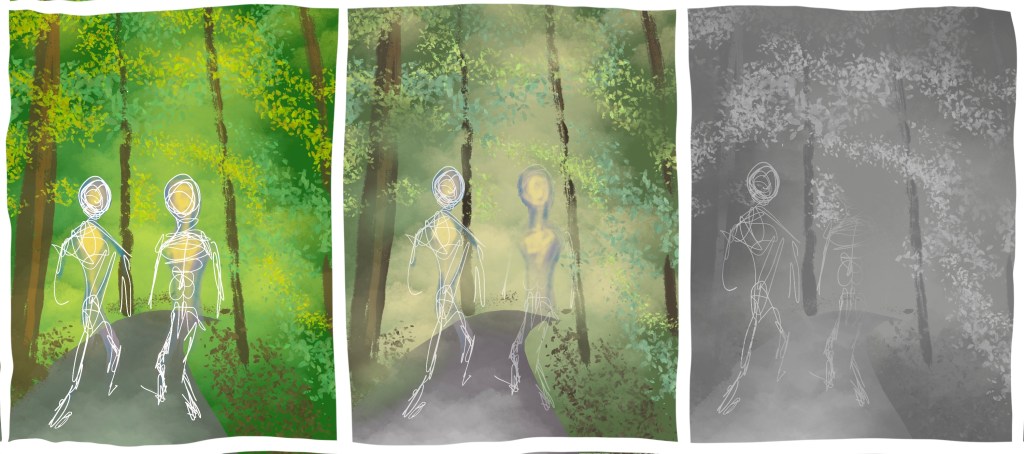
The same may happen with events that I wanted to have a better time at. Things like going to live music events are something that I REALLY enjoy for about 30 minutes at a time, but the events are often 2+ hours and take a lot of logistics to get to. So, I have a middling to negative time, but over time, I overwrite the whole event with my peak experience. This makes me buy tickets to live events and then have a miserable time.
The issue with positive memory drift is that you may create unreasonable expectations for similar events or hangouts with someone. You will always expect them to be more fun, exciting, etc., and become disappointed during actual experiences. This may lead you to become sensory seeking and ditch people and events for the new, exciting model.
Do I have control over how my memories are stored?
There are a few things I have been experimenting with to try and allow for more accurate memory usage:
- Journaling my experience of events closer to when the event happens using the post-mortem approach
- Occasionally reviewing my post-mortems to level set my memory of those events (I have a giant bias towards negativity)
- Trying to catch myself when I am remembering events to make sure that I am recalling them in a way that is both accurate and useful to my goals
This is all a work in progress. We’ll see what happens.
 The Friend Manual: How to make friends when you're bad at it