If you’ll remember from the previous posts, we looked at an experience over time, labeled the axes with feelings, and marked on horizontal lines all the time we spent at that feeling or more positive. The next step is to look at the feeling bands individually and analyze the event experience.

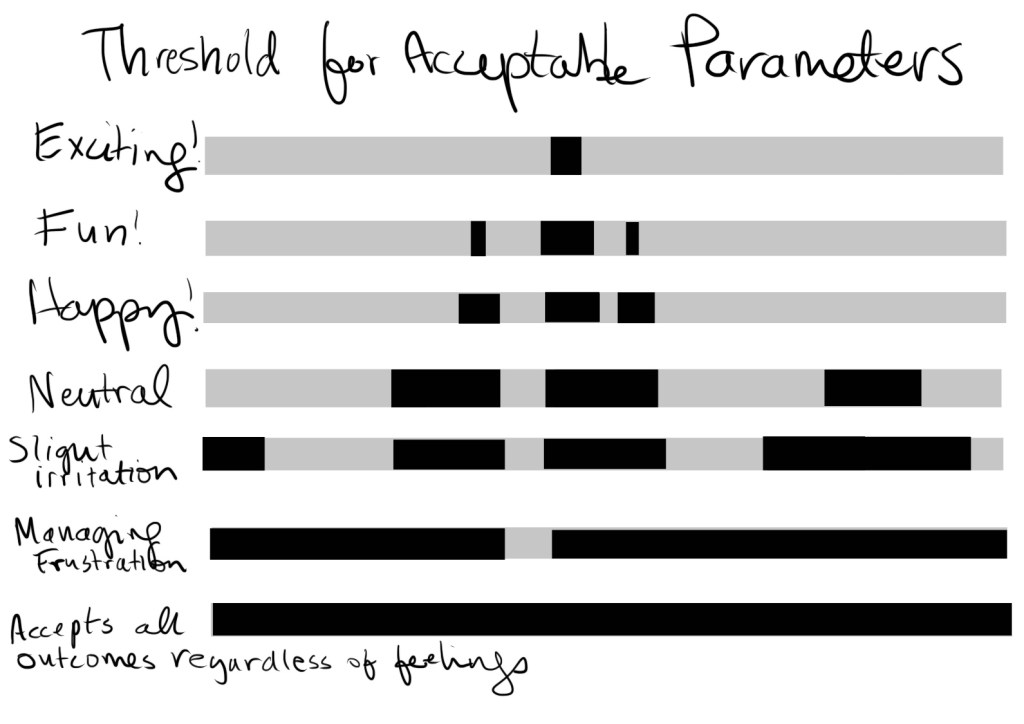
So, did I have fun at this event?
And here’s where the problem solving comes in.
If I just looked at the “exciting” band, it looks like I barely enjoyed myself at all.

If I had in my mind that all events should be “the best” or social media ready or should look like a fancy commercial or try to recreate how I feel around my childhood best friend, then this event would be a bust. If this is my threshold for expectations, then I would probably never do this event again or even try to contact the people that were there.
What if Neutral is within acceptable parameters
Next, let’s look at the Neutral band.
You can see from this band that I spent about 35-40% at neutral or higher feeling before, during, and after this fictitious event.

This also seems like a bust. Who wants to spend 60% of their time below Neutral?
However, if we put in the time of the event into this band, we can see I actually spent most of my time at the event in a neutral to positive space, and I had a post event bump of positive feelings.

What’s the verdict?
If I set my “acceptable parameters” at Neutral or above for most of the event, then YES, I did have fun and this event is worth repeating.
This is why I find this experience map very helpful.
I find the pre-event time very stressful. So, when I don’t separate it out in my head, I find myself drastically undervaluing social interactions because of external stressors, which leads me to sabotage my attempts to make friends.
(Don’t worry, I’ll also talk about events that weren’t a positive experience. This map isn’t meant to try to talk you into every event. That’s not helpful.)
What to do with this?
For me, parsing out that I have outsized stress before and after events means that I can take time to strategize how to reduce the stressors for me so I can be more social.
For example, if it’s traffic and parking that really get to me, then I can schedule my time to leave 15 minutes earlier and have something planned to make a break between parking and showing up. Also, if I have the budget, I can plan to just park at the garage instead of finding street parking.
I can also be the one that schedules the event and makes it at off-peak hours to avoid traffic and crowds.
If I know that I have a post-event crash, then I can “schedule” a time where I can feel my feelings and know that I shouldn’t make any decisions about the future during that time – anyone who’s good at catastrophizing may sympathize with this.
Wait…there’s more? Stay tuned.
 The Friend Manual: How to make friends when you're bad at it