TW: death of a grandmother and pet
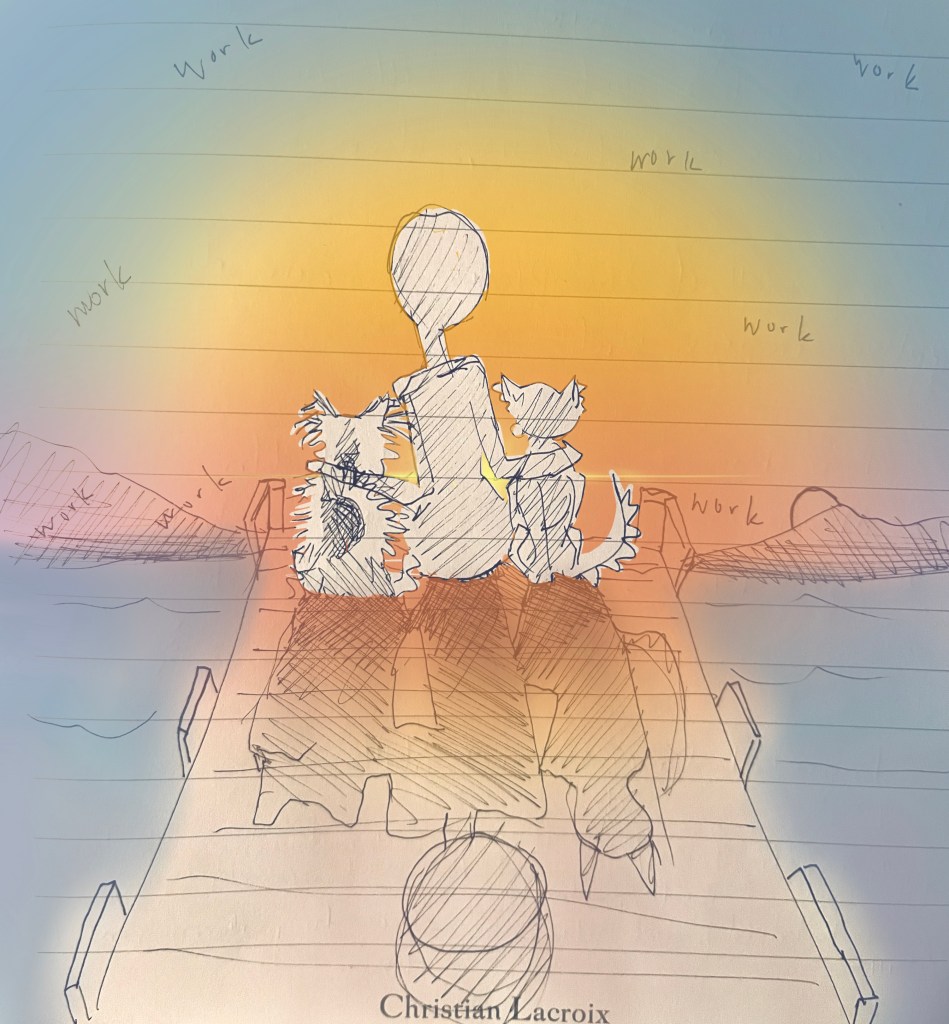
I was acutely aware that I didn’t understand death. I understood the basics, but I didn’t understand the emotions or the experience. Previous deaths I have experienced were when I was too young or too distanced to be heavily impacted. But I knew one day I would have to understand.
Now I do. And it sucks.
On June 18th, I took my beloved dog to be euthanized after a long battle with many different medical conditions. It was the worst thing that has ever happened to me. And part of the reason it was so bad was because it was something I chose to do and he was my best friend for a decade. It was the best of five terrible options.
Eleven days later, on June 29, my grandma passed after a long battle with cancer. She had cancer previously, went into remission, and it came back with a vengeance and she was 90 in the end. I’m pretty sure I haven’t even started processing her passing because it’s all jumbled up with my guilt over my dog.
Now, something that is all hard and messy is more jumbled up and messy. I knew on the day I came home from the vet that I absolutely needed to find ways to grieve my losses that kept me from shutting down and solidifying into to a piece of angry, shame-ridden, guilty stone.
I’m planning to have a few blog posts dedicated to Friends Who Have Passed to be able to reference later when I need them.
Here are the first three things I learned:
#1 Death is one of the only things in life that can’t be reverted
The reason death is terrifying to me is that there isn’t a redo. As someone steeped in digital stuff most of the time, I’m addicted to ctrl+z and rewinding and pausing and restarting shows I get distracted from. I can return items I bought. I can break up with someone and get back together. I hear stories about people going back to jobs that they have quit. Not many things are actually unreversible. Death is a cliff into an unknown abyss. And once it’s there, the living must walk into its darkness to get to the other side.
#2 Death seems like an instant, but it is a part of a continuum
In the days after my dog’s death, I could first only focus on the few minutes when he died. These were the worst moments that felt like being struck by a lightning bolt and being set on fire from the inside. It took a concerted effort to start to widen the lens of my focus. I had to start pulling in the rest of the story and continually, with mind-numbing levels of repetition, keep telling myself more of the whole of the story. Instead of just the instant that my choice became unreversible, I remind myself of the months of pain and struggle that led up to that choice. And eventually, I started not only adding his story into it, I added mine as well. Because the continuum includes not only those that died, but those who accompanied them to that point and those that must walk on after.
In my grandma’s last days, I didn’t call her. We had been friends for decades, not just relatives. I would call her and tell her jokes and tease her and she would do the same (to be fair we would also grump and whine and be petty because we are humans with multitudes). One time she talked about how she always wanted a Hooters shirt, so I sent her one in the mail and she wore it over to my parent’s house at 80-something years old, just for fun. She was also a dog person who had dogs as best friends too. I didn’t want to tell her that my dog had passed because it may have made her feel guilty and try to stick around longer when she was already in enormous amounts of pain. But it also meant that I didn’t call because I was too sad to be able to fake it.
This is part of the continuum. In a micro view, I failed her in her last days. When the view stretches, I feel differently. I feel more things at the same time. I am someone who feels guilt and happiness and joy and annoyance and connection and…and…
Looking at the longer view lets me keep these really important friendships intact and removes the temptation to rewrite old memories with sadness or anxiety or grief.
#3 I need to look outside myself for help on this
Contrary to my stubborn, self-sufficient nature, I have actually taken the healthy, paved metaphorical road for once (instead of the bramble-filled unbeaten path) and looked for resources for people experiencing grief. It was only a few months after the diagnosis of my grandma and dog that I went into therapy again because I was physically and mentally falling apart. I credit these six months of learning how my brain works and learning how to talk about and research and test out new things that allowed me to be open to all sorts of solutions to something as complex as grief. If I had been left to my own devices, I think it could have been much worse.
So, I found podcasts and books and online communities and I had discussions with family members and friends. Here are some of the resources/activities that helped me with the first two lessons:
- Writing the story of my dog’s long illness and last day in great detail. I got this idea from episode #104 of the Depresh Mode podcast – Ana Marie Cox on Writing Your Recovery Story.
- Getting the My Pet Remembrance Journal workbook with writing prompts specific to the lost pet’s whole life
- Getting a Megan Devine’s grief journal How to Carry What Can’t be Fixed (which has beautiful illustrations and a lot of visual prompts that work with my brain) and her book It’s OK that You’re Not OK and reading when I can.
- This Ted Talk – The emotional costs of euthanasia by Sarah Hoggan DVM
- Episode 238 of the Grief Out Loud Podcast “These Relationships Matter” – Grieving The Death Of A Pet
Bonus(!) #4 It’s gonna take a while, so stop rushing it
My brain has a tendency to reject emotions and try to close out stories as fast as possible. Even on the third day, I suddenly had a few hours of “clarity” where I felt like “good job, I’m glad I did that well and now it’s over.” I felt guilty, but also proud, because I’d done such a good job and grieved properly. A+ for me! Sure it was disconcerting and I felt a little guilty, but that’s fine.
Half an hour later, I was back in the abyss.
It’s going to take me time to work through this and reincorporate all the new things in my life and the new parts of me that evolved in a split second. I need to stand still in this place for a while.
 The Friend Manual: How to make friends when you're bad at it