Flexibility is a key component to making and keeping friends. What happens when you’re bad at it?
“Within acceptable parameters” has become one of the defining phrases of my life. I use it all the time at work, and at home. I use it for concrete tasks, social actions, etc. It’s one of the foundational concepts to my approach on this blog.
What is ‘within acceptable parameters”?
This phrase is something I came up with when I was cooking professionally. I’m someone that needs to do something the “right” way at work. Exactly the right way. This can be a blessing and a curse.
Take something as simple as bread.
To make it, you add yeast, flour, and water. Let it rise. Punch it down. Shape it. Let it rise again. Bake. Eat with butter. Yum. It should be simple, right? It should look like this diagram of bake times:
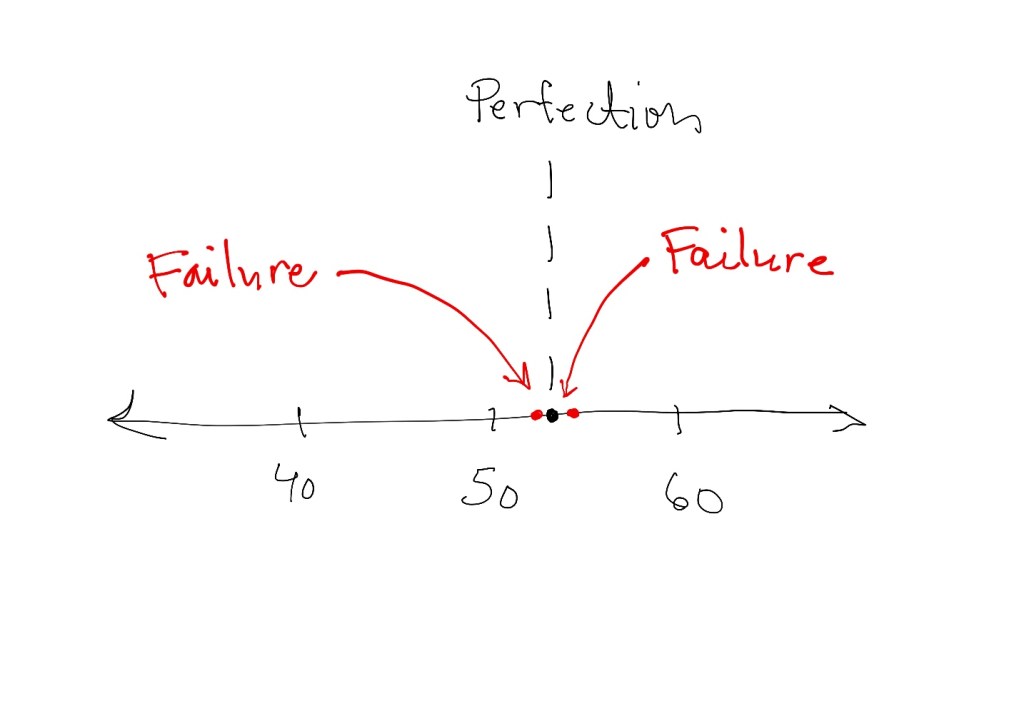
And I kept getting frustrated because there wasn’t an exact time for when the bread would be perfect. It kept changing. And when I asked if something was done correctly, they said yes when I could see there were differences. Wait! Which one was good? If that one was right, how can this one also be right?
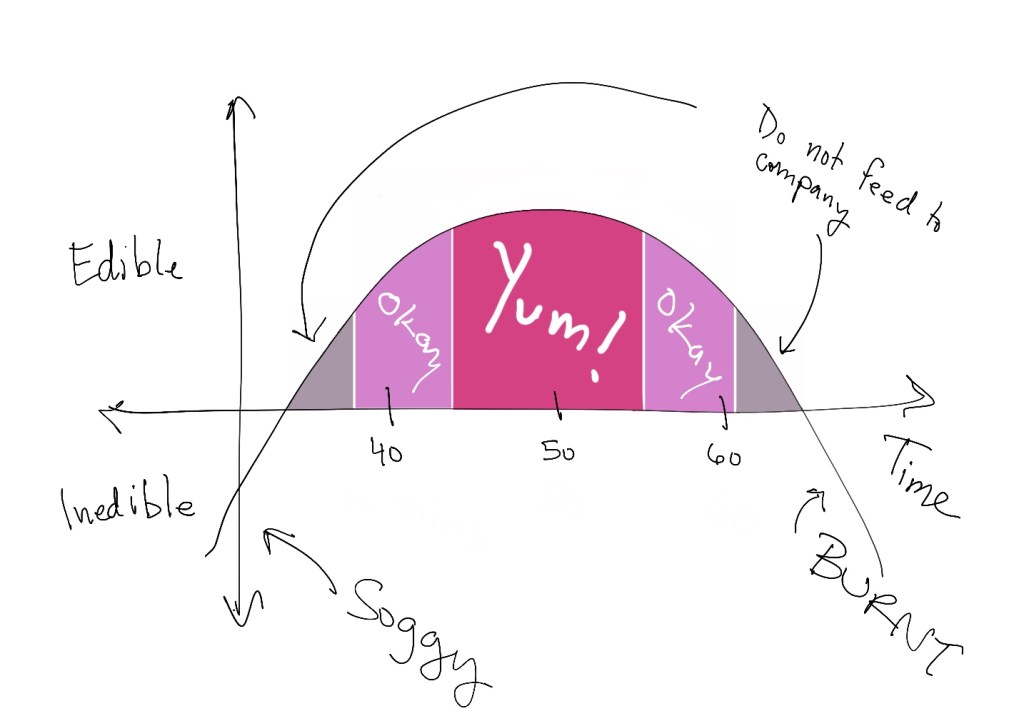
So, to save my sanity I came up with the term “within acceptable parameters”. I would keep a running tally in my head of what the minimum was and what the maximum was. For bread, this would mean “this light golden color” is the bare minimum to be cooked, and this ” deep caramel color” means that it’s too cooked. Anything in between is acceptable. And anything “acceptable” is equally valid to consider the task complete.
Why does this matter?
There are two main reasons this helps me in life.
First, without this model of a variety of accepted outputs, I was constantly trying to start from square one and figure everything out from end to end. It required a LOT of cognitive processing and it was really annoying to my coworkers. It made me consistently insecure about everything because I was counting everything as a failure because I didn’t understand when I had technically done it right enough.
Second, it allows me flexibility to accept different outcomes while still maintaining high levels of quality. When I don’t have this flexibility, then the stress builds up and I tend to hold onto failures (that often aren’t even technically failures) which undermines my ability to do well in the future.
Why does flexibility matter for friendships?
Friendship involves interaction between two or more humans. Humans are fallible, flawed, and inconsistent. The system between two or more people is always changing, which means that the same inputs will not always produce the same results.
Specifically for friendship, if you’re not flexible enough, you may have trouble understanding when people are actually acting within the aggregate range of friendship and you may go through a continual cycle of friends that you make and release. Or, you may assume someone is not a friend who is actually within this friendship realm (or they may be a higher level of friend than you have previously rated them at).
If you are too flexible, then you may sacrifice your own needs/psychological safety to allow for the behaviors of others. If you are unable to distinguish friend behaviors from not-friend behaviors, then you are vulnerable to gaslighting, being taken advantage of, and pouring all of your energy into friendships that do not pay dividends.
You’ll see more about how “within acceptable parameters” can be used in the next post in this series.
 The Friend Manual: How to make friends when you're bad at it