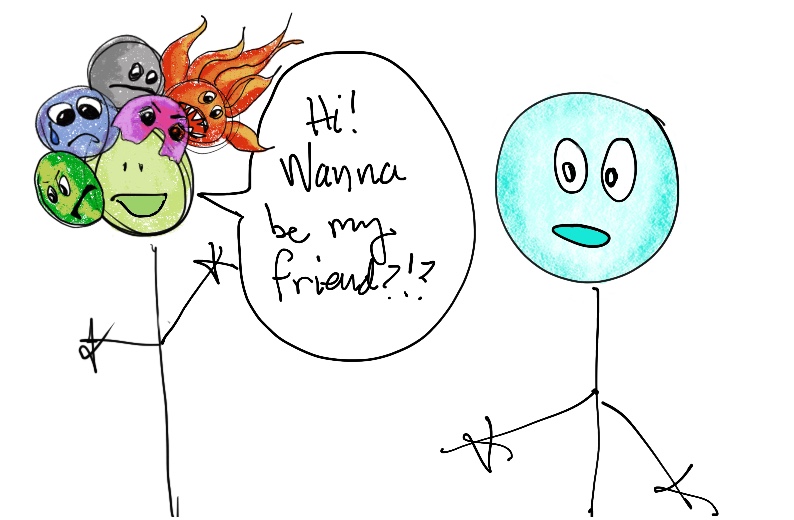
I love to talk about consent in the world of friendship. Consent is often relegated to the spheres of romantic/sexual relationships and work relationships. But it belongs in friendship too!
Here are some basic rules of consent:
- Communication is key
- Social pressure = not cool.
- Anything other than a freely given “yes” is a “no”
- Consent can be revoked at any time for any reason
- Consent requires more intentionality for both people (and that’s not a bad thing)
- Once the conditions change, the consent is revoked and must be renegotiated
- Consent given for one thing does not imply consent for the same thing again
- Continuing to ask when the person had not accepted any asks or explicitly stated they would like you to continue asking violates consent
- You don’t owe anyone consent for any amount of effort or social pressure
Consent and Social Risk
An element of social risk is involved in both asking and responding to social overtures.
When someone asks another person to engage in friendship behaviors, they are risking refusal and the emotional impact of refusal, but they are also signing up for the social-emotional load of acting if the person accepts.
When someone accepts the overture, they are signing up for the social risk of needing to continue to “want” to do the thing and to show up when the other person has put in effort to plan the thing.
And both are signing up for the pressure to renegotiate when the new social dynamic becomes untenable, i.e., someone wants more/less than the other person is currently giving right now.
I think the reason people shy away from explicitly consenting and expecting explicit consent from people is that it involves taking on more social risk. If I ask someone vaguely about something and they reply vaguely, then both of us can interpret the interaction however we want to. If I am more explicit and I am turned down, then I know that my social overture has failed. If I turn down someone explicitly, then I can’t reinterpret the interaction later.
Don’t worry, there will be more…
 The Friend Manual: How to make friends when you're bad at it